La petite lucarne (The little screen)
A series of three one-week workshops held in the Drôme, in the one-room schools of Cobonne and Saint-Nazaire, between April and June 2019. These workshops offered to make a TV show from A to Z.
Each workshop starts with an editorial meeting that decides which reports to film, and ends with a live show in front of the villagers, entirely produced by the children.
Workshops led with the association Désert Numérique and the video artist Sarah Brown.

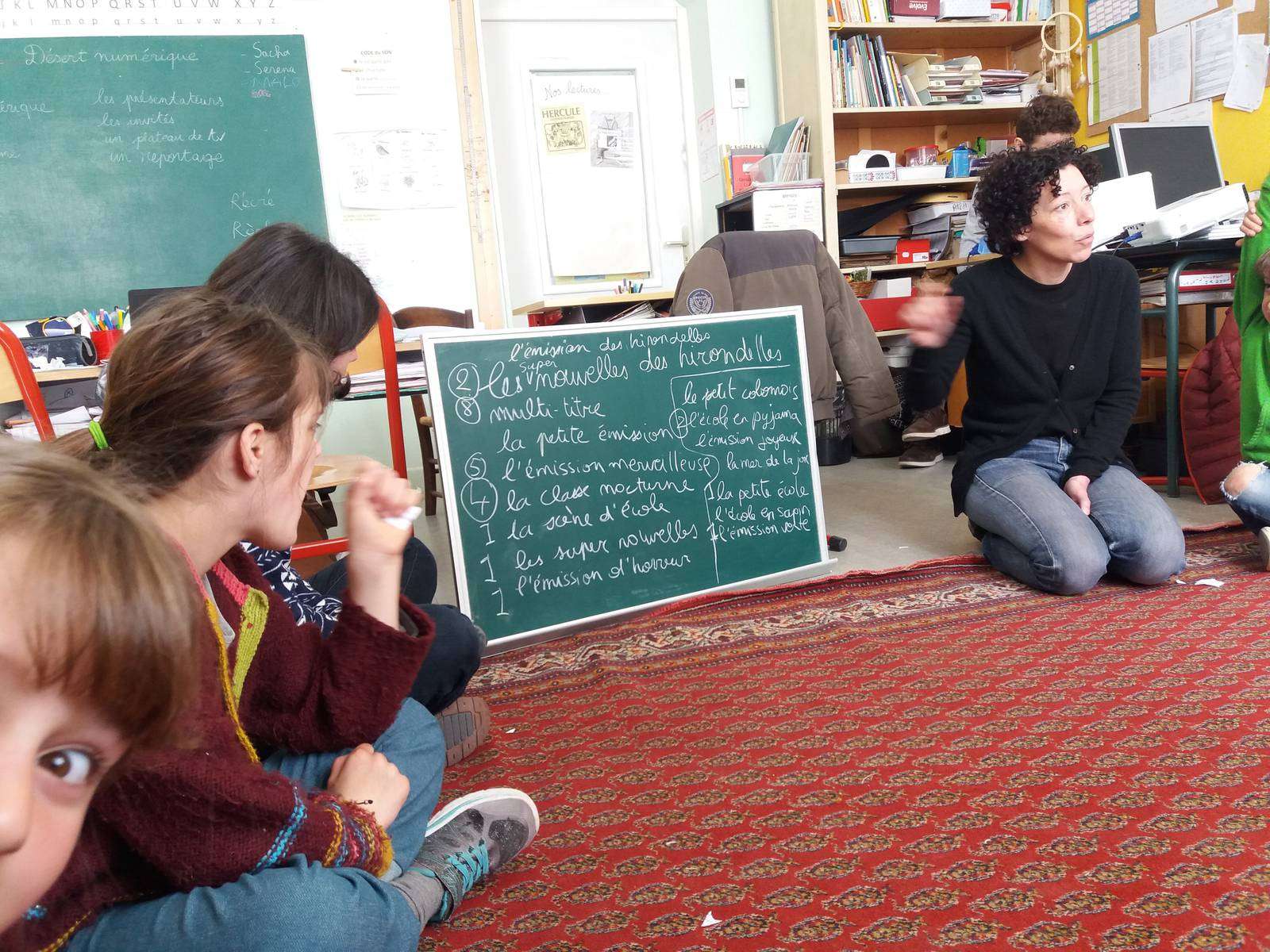
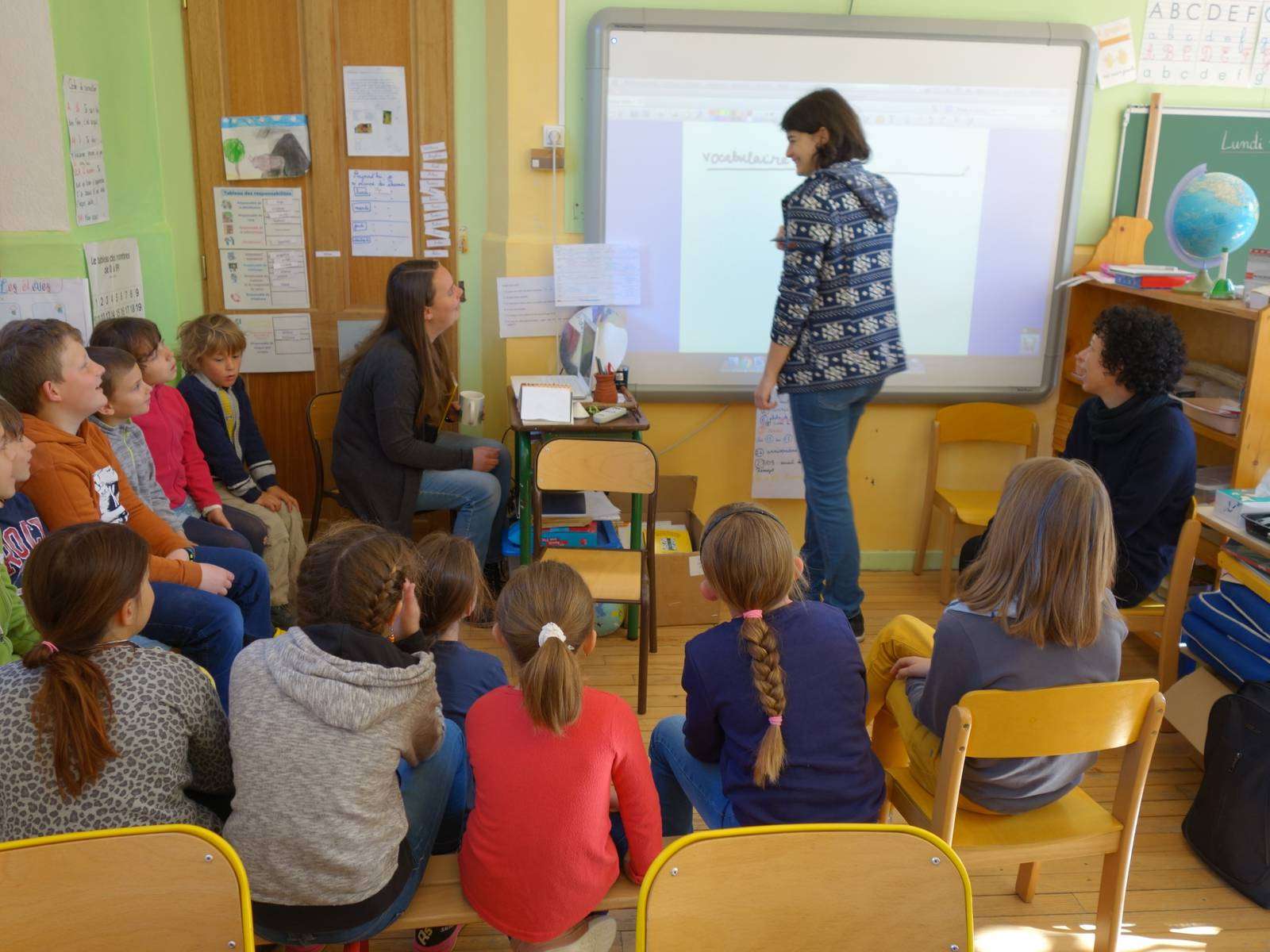
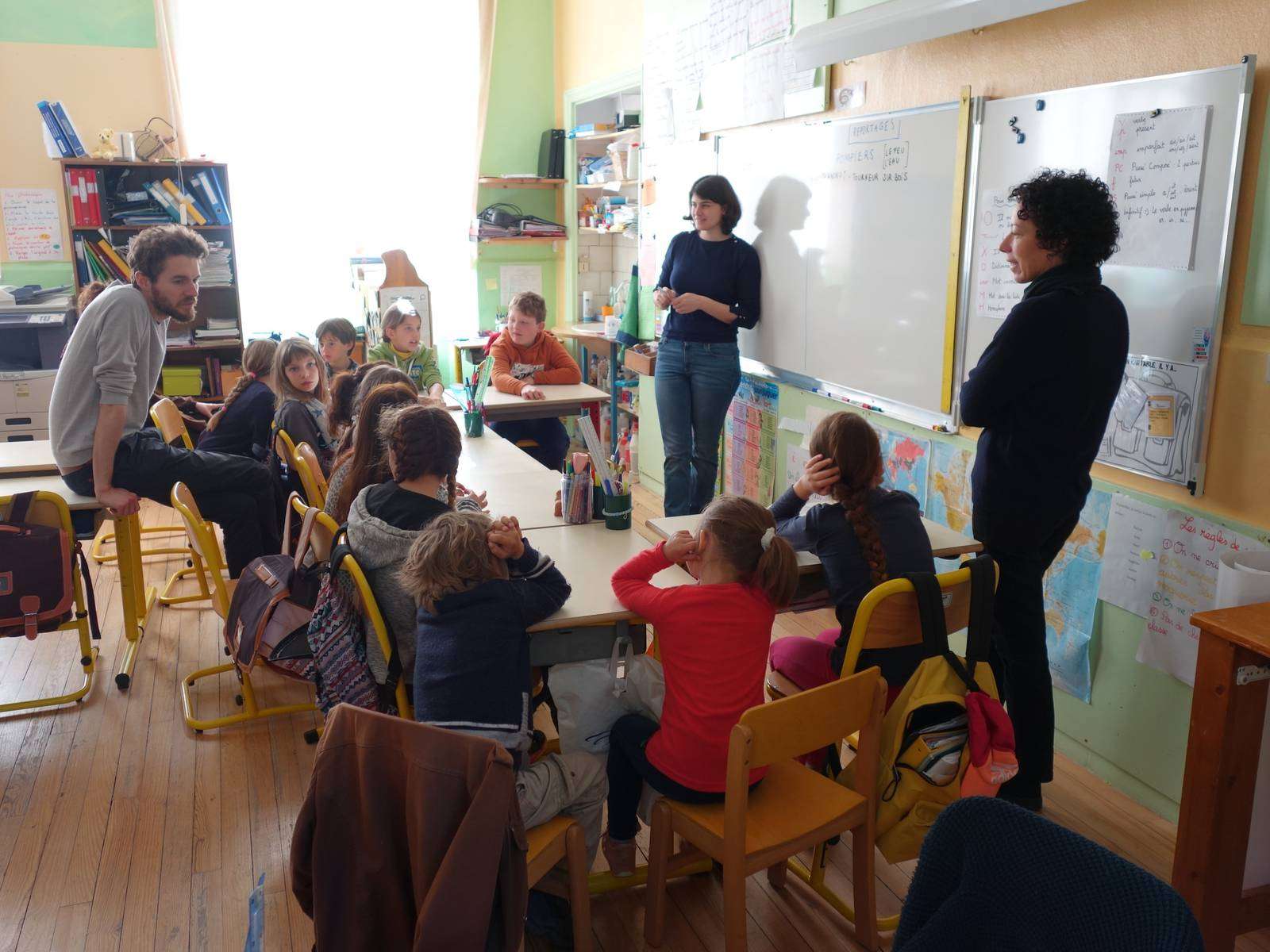
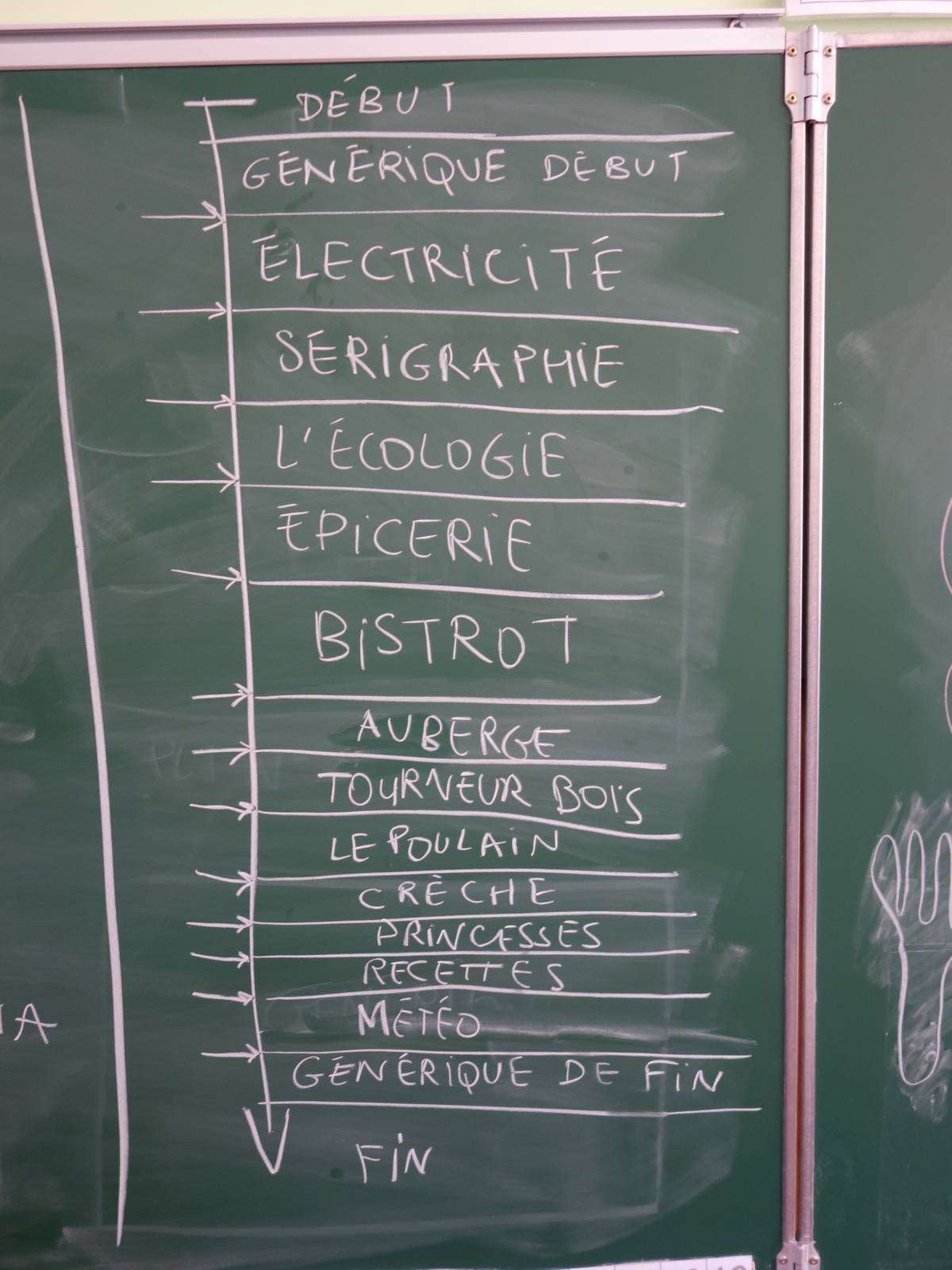
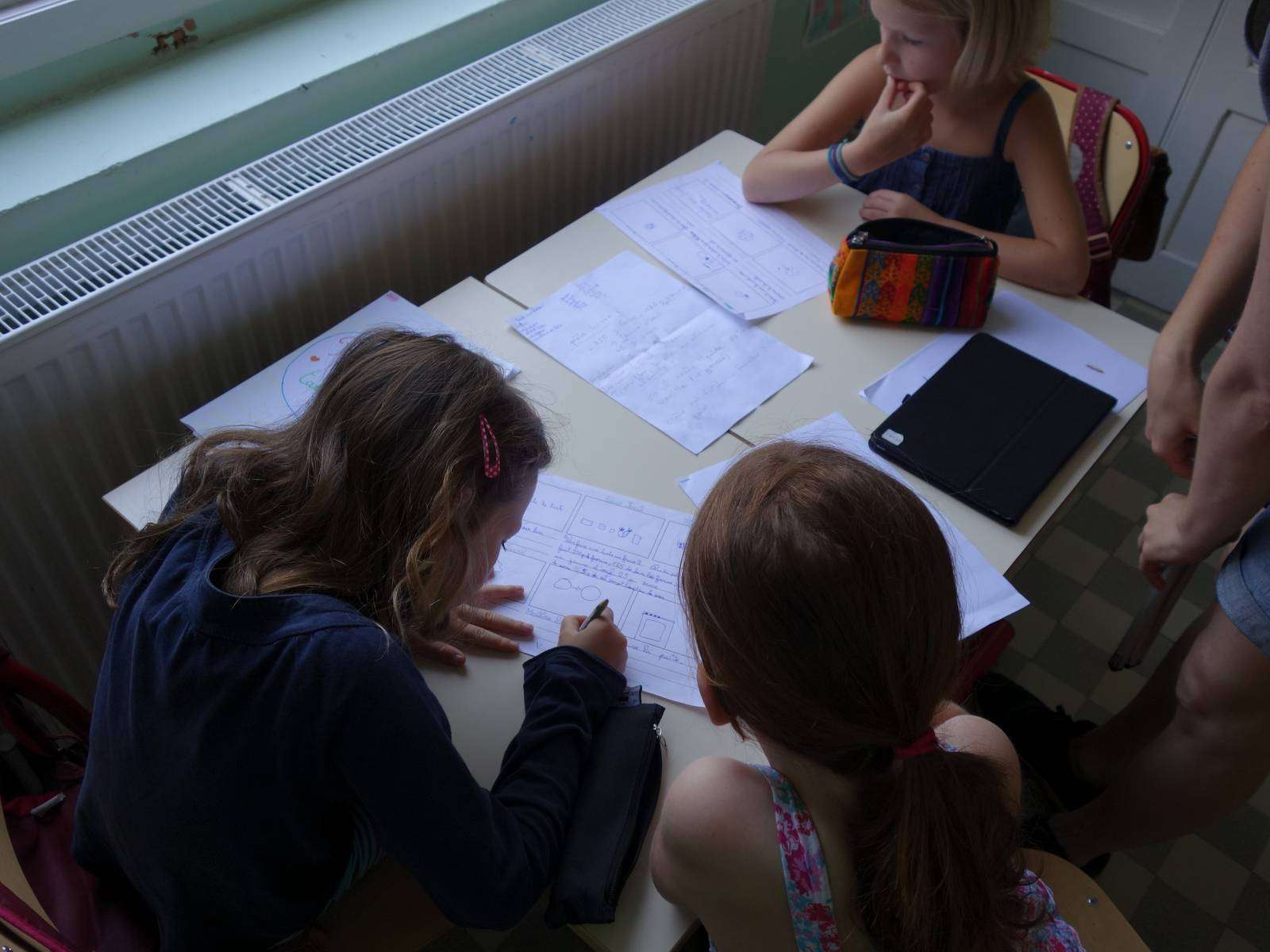
On the first day, we define together the vocabulary related to TV shows and the different possible kinds of videos. We talk about the set, camera operators, news reports, tutorials, documentaries and fiction. After this discussion, we list the students’ ideas for reports; each workshop brought very different topics (a report on the sewage treatment plant, an interview of the wood turner, cooking recipes, weather forecasts, princess stories, etc.). Once the topics are written on the board, we ask the children to vote with their eyes closed for the topic they want to work on. Voting with eyes closed avoids groups formed by friendship rather than by interest in the topic. Each group then fills in a report sheet with the main information (topic, description, medium, equipment, etc.) and each child makes a research folder (an A3 sheet folded in half). From the report sheet, we write together a task list for each group.
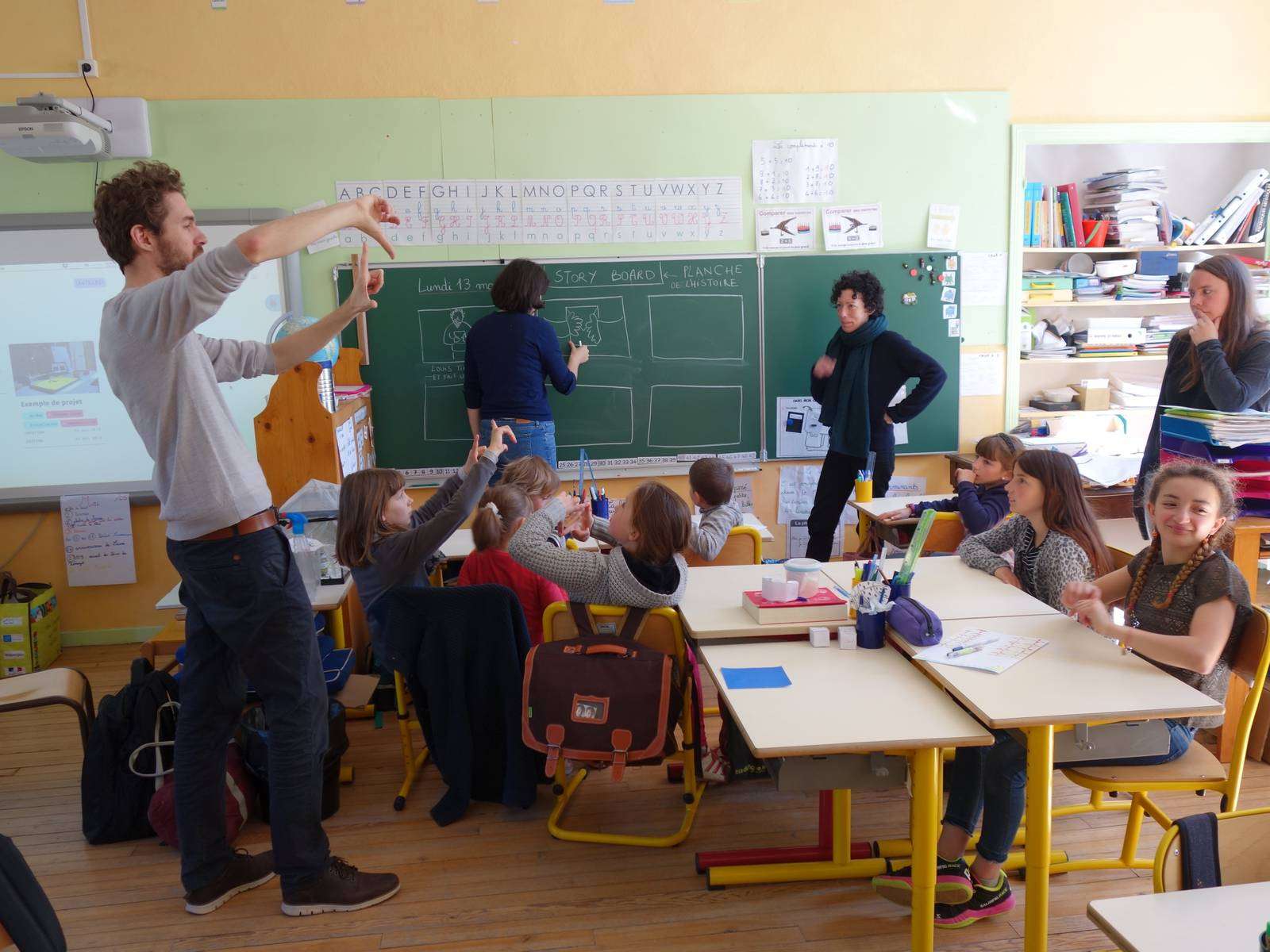
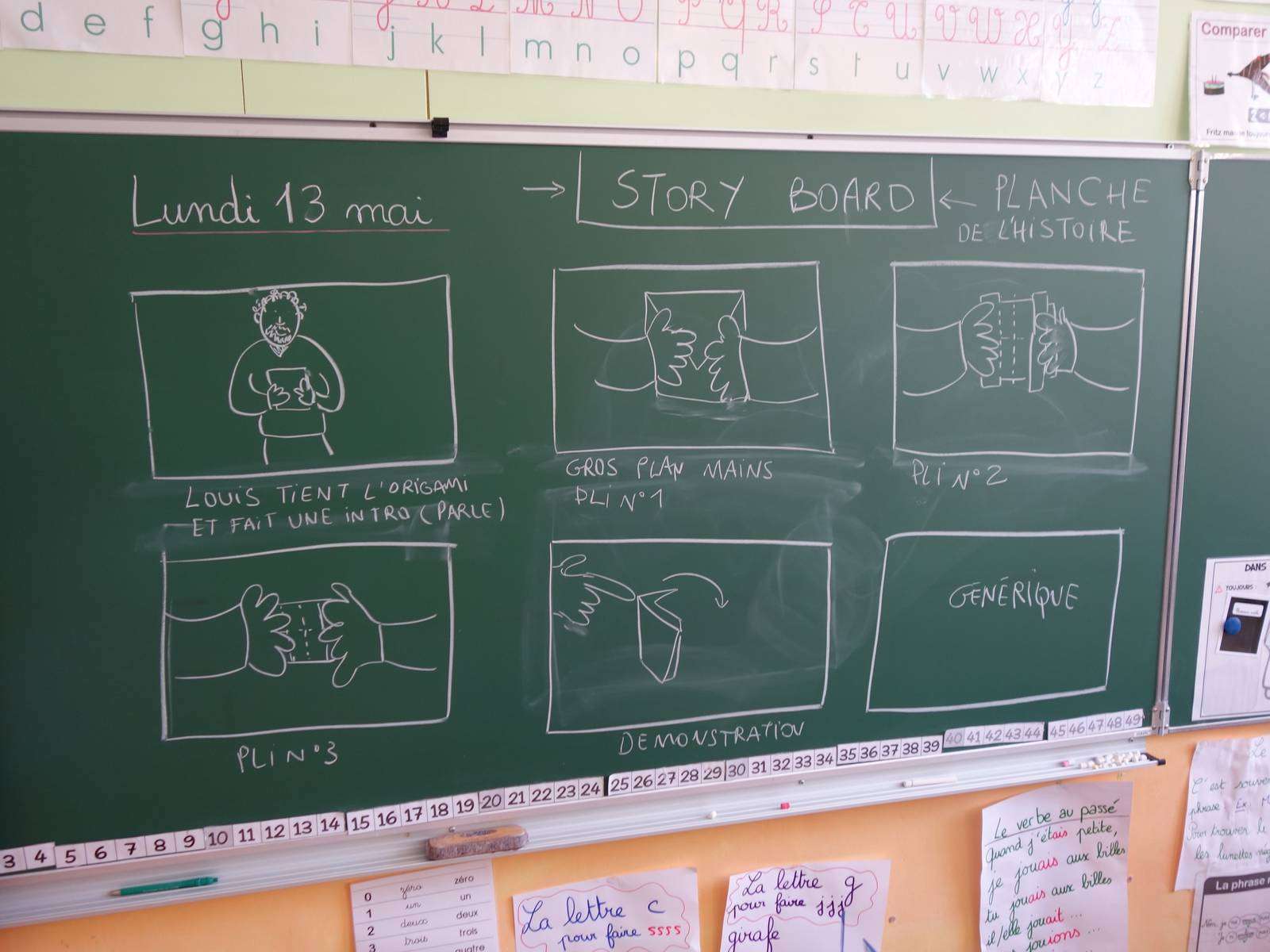
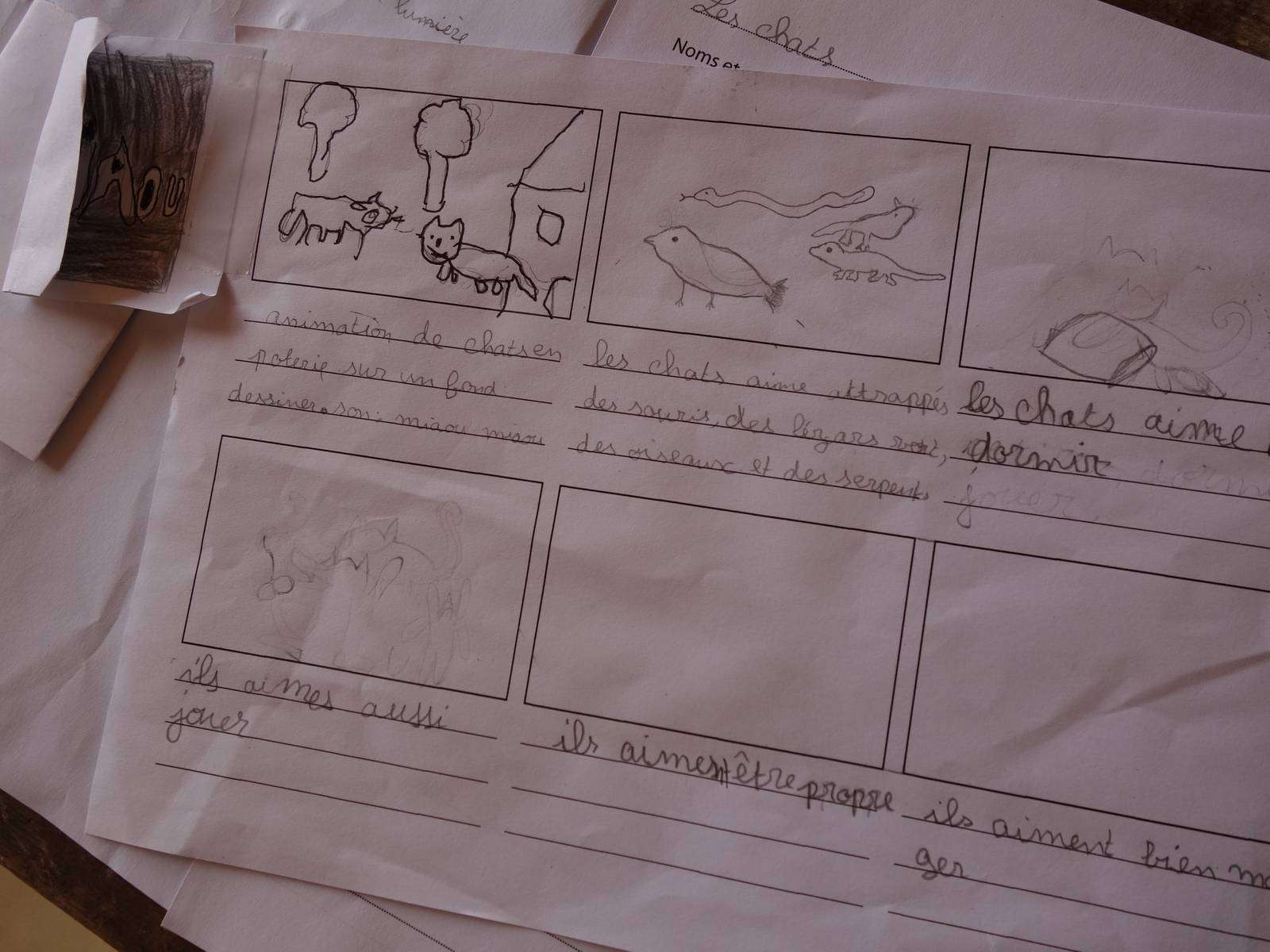
One of the goals of this first day is to make a storyboard to prepare the shooting. To understand how it works and why it is useful, we do a simple demonstration. We propose a three-shot sequence, draw it on the board, and film it by following it to the letter. Then it’s the students’ turn to do this exercise: making a 3-shot storyboard showing an everyday eco-friendly gesture, with a sentence to say. The students leave in groups to make their video. Once the videos are done, we watch them all together and discuss what works and what could be improved.
In the afternoon, the students work on the storyboard for their topic, and we follow them to list what will be needed for the shooting the next morning. At the end of the day, we review the progress and vote for the title of the show.
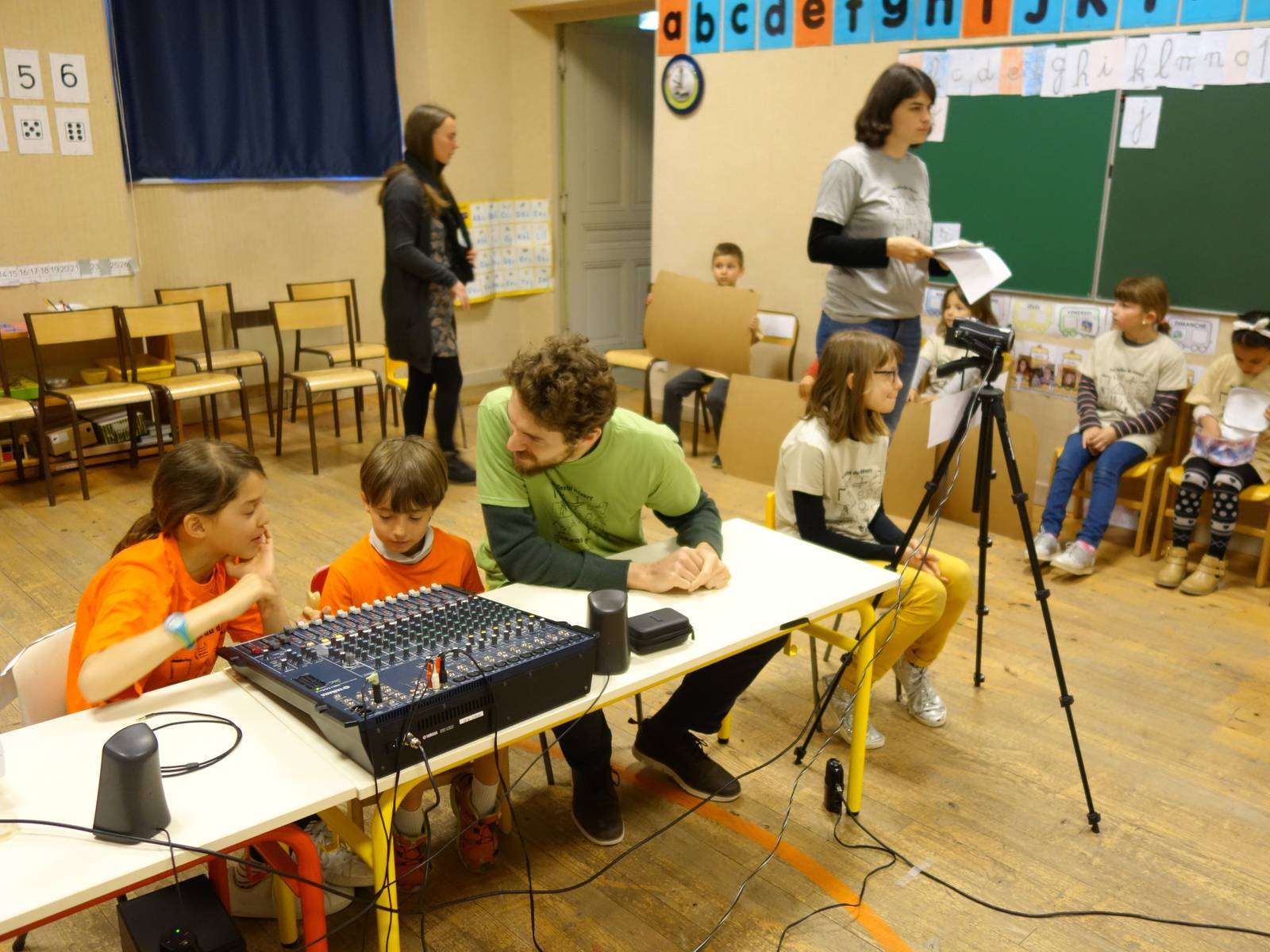
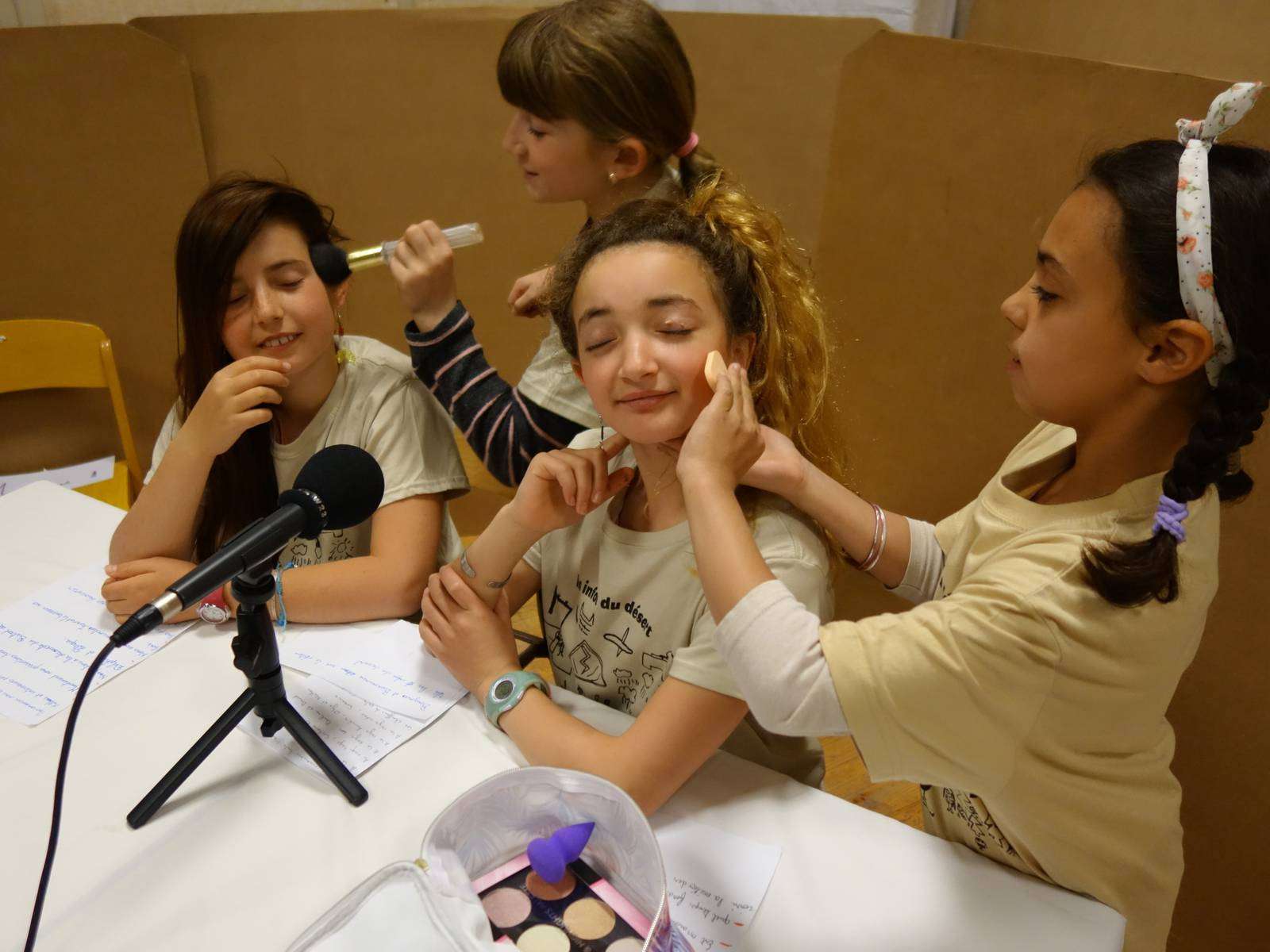
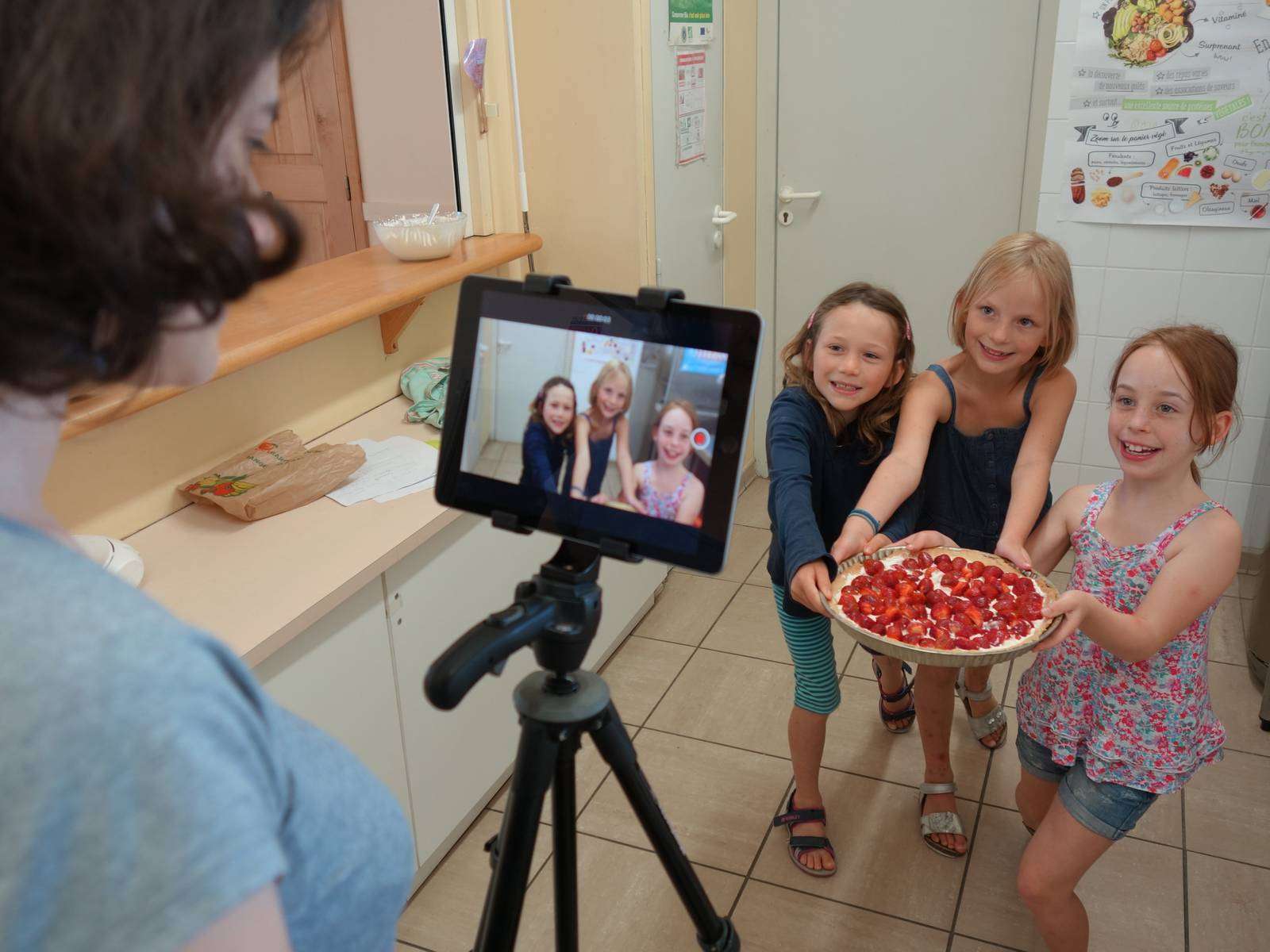
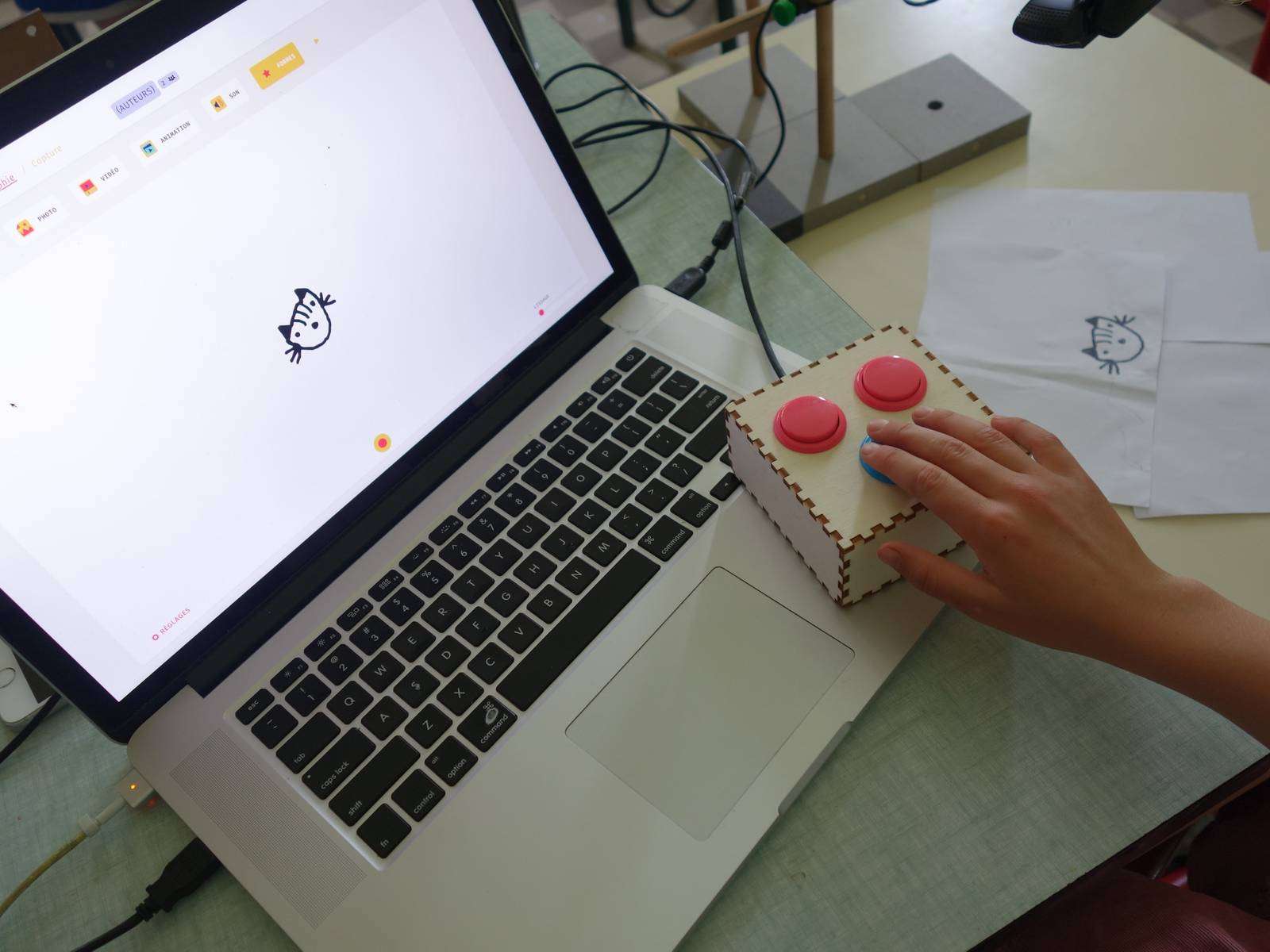
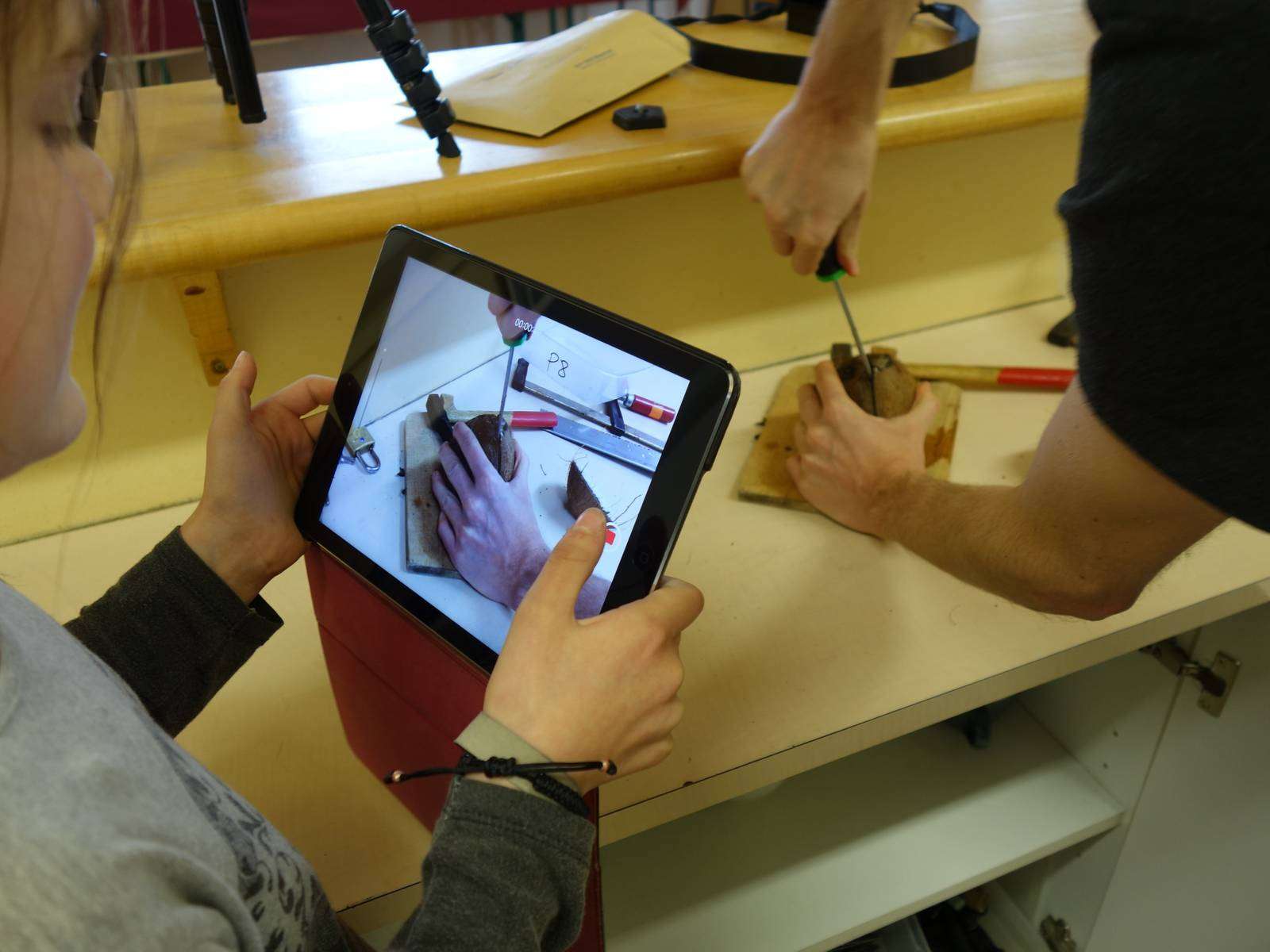
On Tuesday morning, all the groups go out shooting with an adult, tablet and storyboard in hand. They then trim the sequences if needed, upload them to dodoc and start editing. On Tuesday afternoon, the students make a drawing that will be screen printed on the t-shirts they will wear on the day of the show. The drawings are photographed in dodoc with the shape mode, which vectorizes the drawing. To show how the show will run at the end of the week, we set up the technical elements of the set and give them a demonstration, in order to assign each role: hosts, sound control, video control, camera operators, warm-up hosts, makeup artists and lighting control.
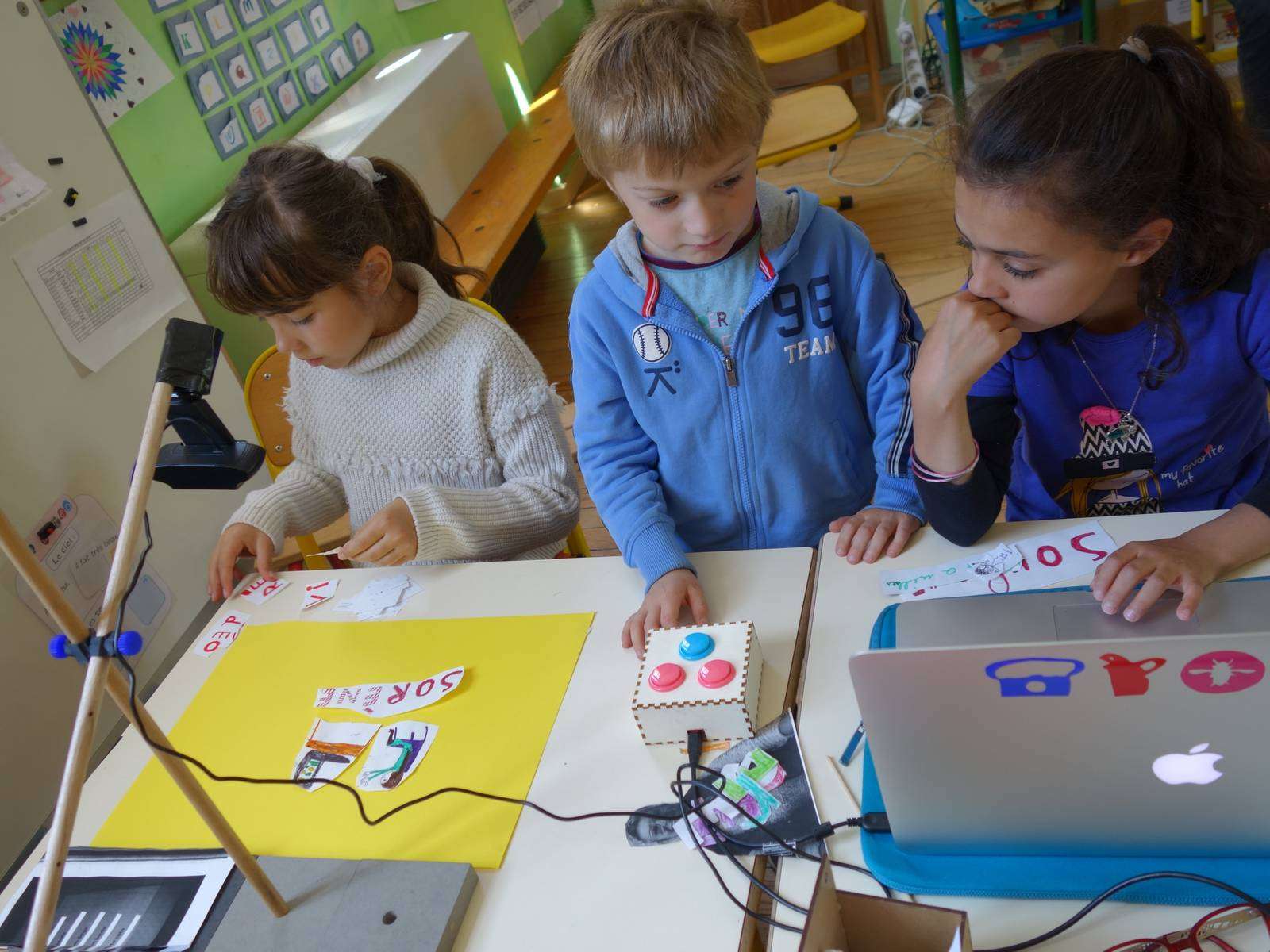
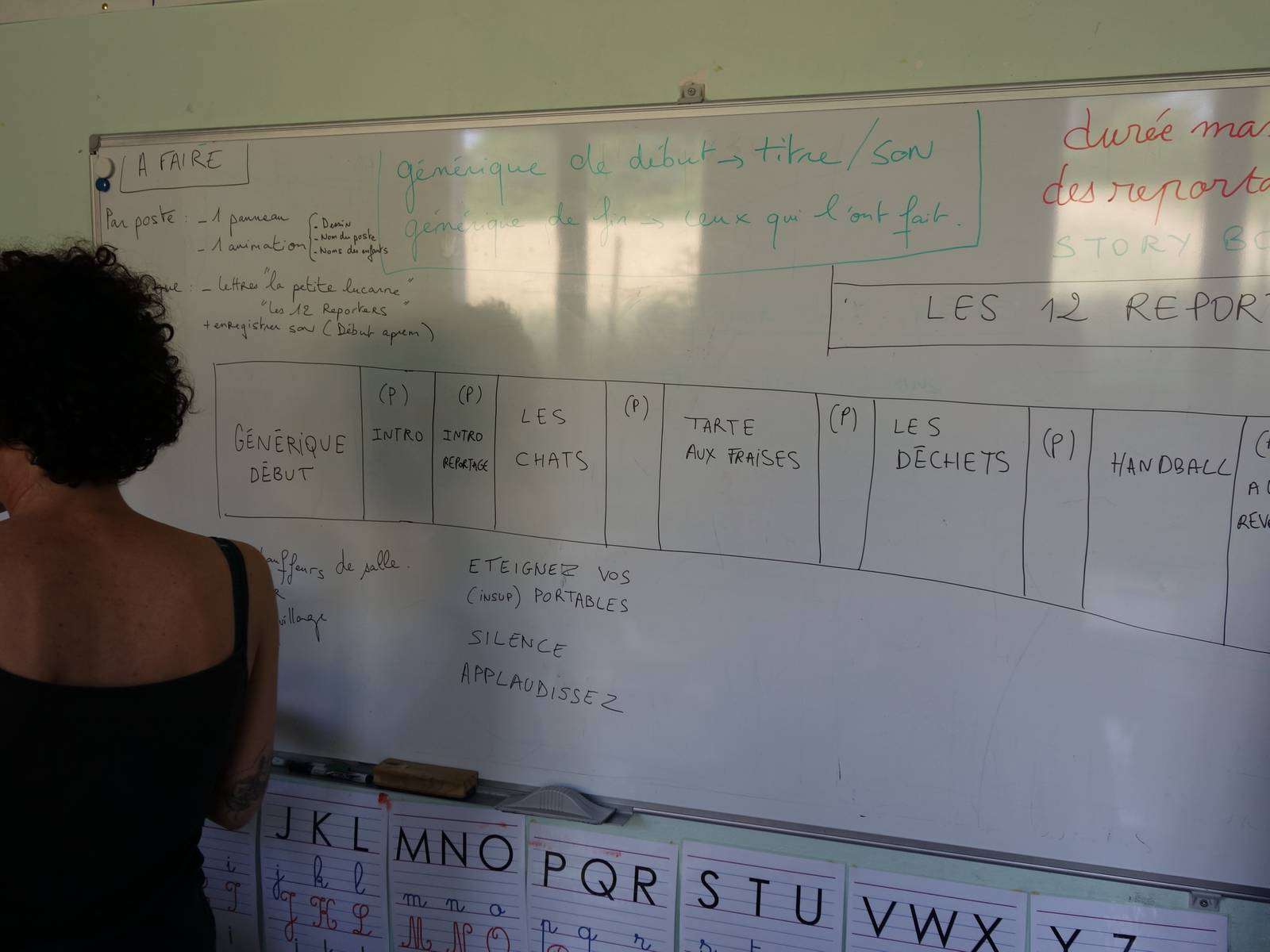
Thursday morning is screen printing time. Yohan, a screen printer from the Drôme, comes to lead this workshop. But first, we review where we are and decide together on the running order of the show (the order in which the reports will be screened) so that the hosts can prepare the text they will say. In groups, the students then learn screen printing and print their t-shirts. Meanwhile, the other groups finish their reports, the stop-motion credits and the editing. In the afternoon, the students work on the shared tasks: opening and closing credits of the show, making the set decorations and the signs announcing the different stations in the room.
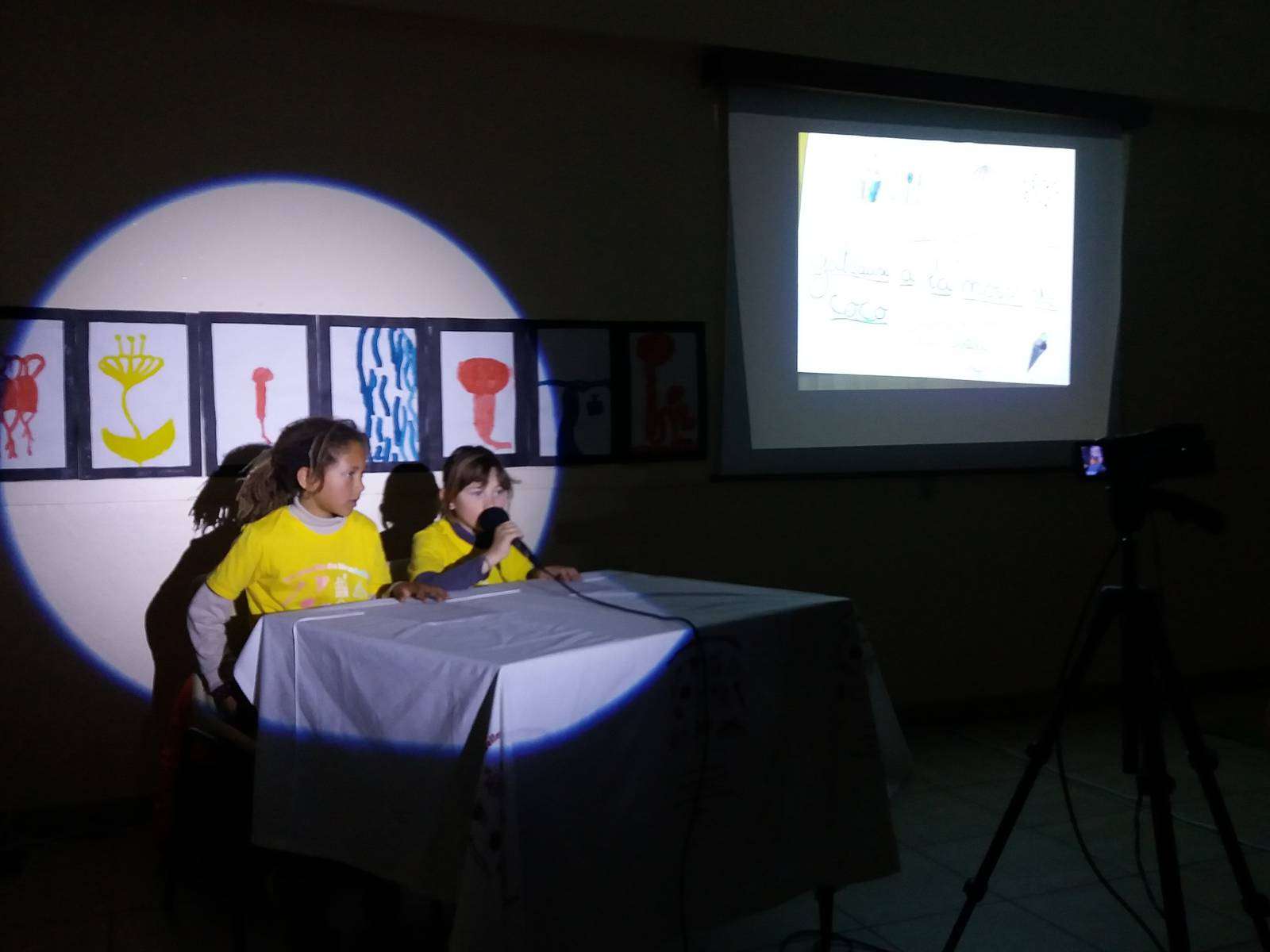
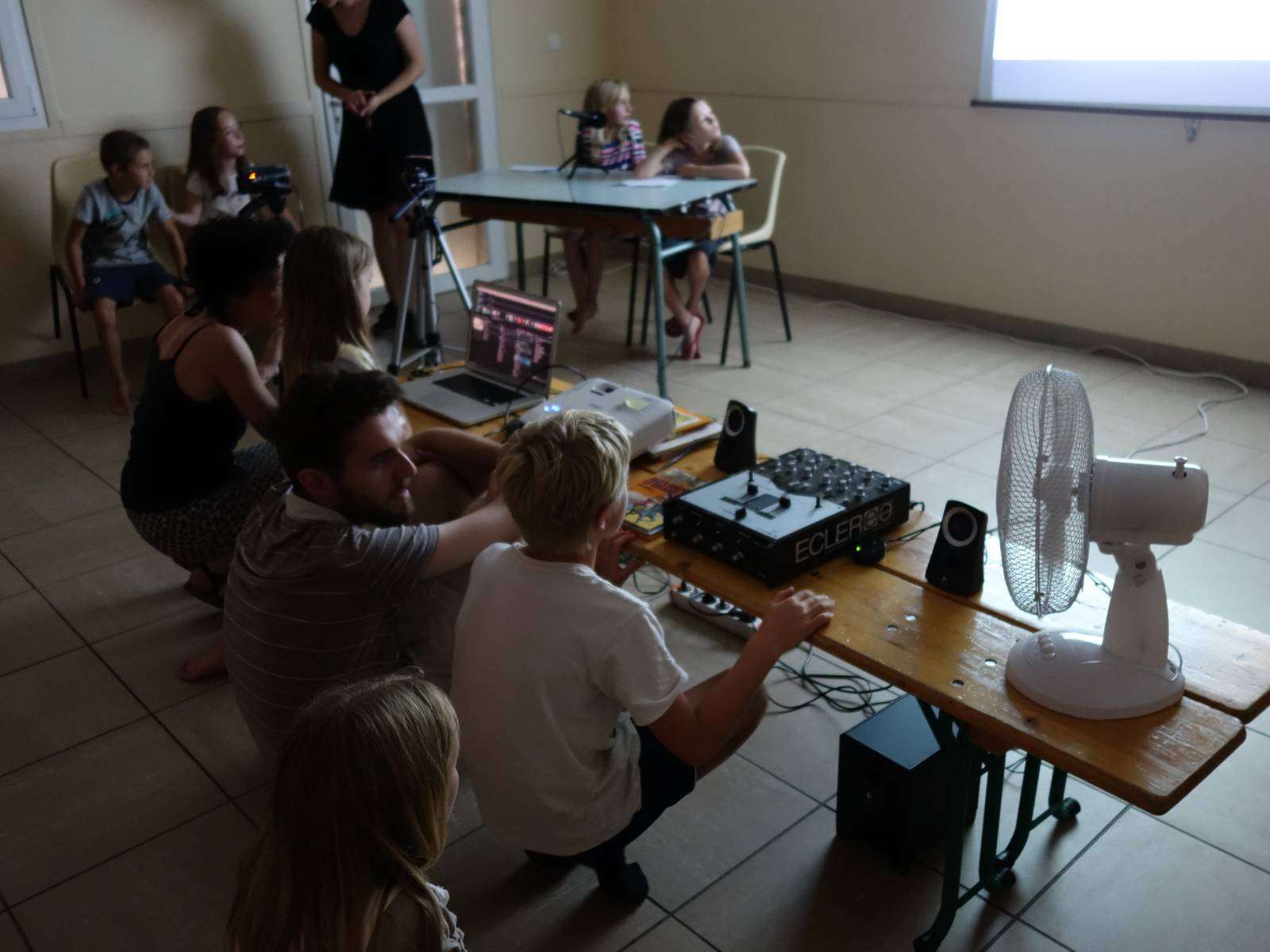
On Friday morning, everything is almost ready for the live show, and the morning is taken up by a dress rehearsal, as if it were the real thing. The students take their places, and after a few instructions, the rehearsal begins. The hosts read their texts introducing the reports, the reports are screened, video control switches between reports and camera, sound control turns on the sound of the microphone or the video, lighting control lights up the hosts, the makeup artists make up the hosts at key moments (at the beginning and in the middle of the show), the warm-up hosts give instructions to the audience (silence, turn off your phones, applause): everything goes well, a few small details to fix, but the students are very focused. The rest of the day is dedicated to quiet times (reading, games, origami, drawing) and to setting up the decorations: screen printed posters, children’s drawings, etc. At 4:30pm, everyone is in place on the set and the audience starts arriving. The show begins, everything goes as planned: applause and snacks!
La petite lucarne is an arts and digital education project proposed by the association Désert Numérique in 2019, carried out with the one-room primary schools of Cobonne and Saint-Nazaire-le-Désert (Drôme), approved by the French national education system and supported by the Fondation de France, the DRAC Auvergne-Rhône-Alpes, and the town councils of both villages.
More information: desertnumerique.net